The Numbers Behind the Hiring Gap
July 30, 2026
Talk to a business owner in Teller County and you'll hear it within five minutes: good help is hard to find. Talk to someone job hunting and you'll hear the mirror image: there's nothing out there that fits. It sounds like a contradiction. It isn't. The numbers back up both sides.
Start with the employer side. In survey after survey, roughly three out of four employers report difficulty finding the talent they need. Not difficulty finding applicants. Difficulty finding the right ones. A single online job posting can pull in well over a hundred applications, and hiring managers consistently say only a handful are genuinely qualified. The rest is noise the software was supposed to filter and didn't.
The time cost is real too. Industry research puts the average time to fill a professional role at around six weeks, and every one of those weeks has a price tag: overtime for the team covering the empty desk, lost sales, burned-out managers reading resumes at 9pm.
Now flip it around. The candidate side is just as lopsided. The large majority of the workforce is what recruiters call passive: employed, not actively applying, but open to the right opportunity if someone brought it to them. Those people never see most job postings. Meanwhile the people who are actively applying report sending out dozens of applications to get a single interview, and surveys regularly find that only about half of workers feel their current job actually fits their skills and life.
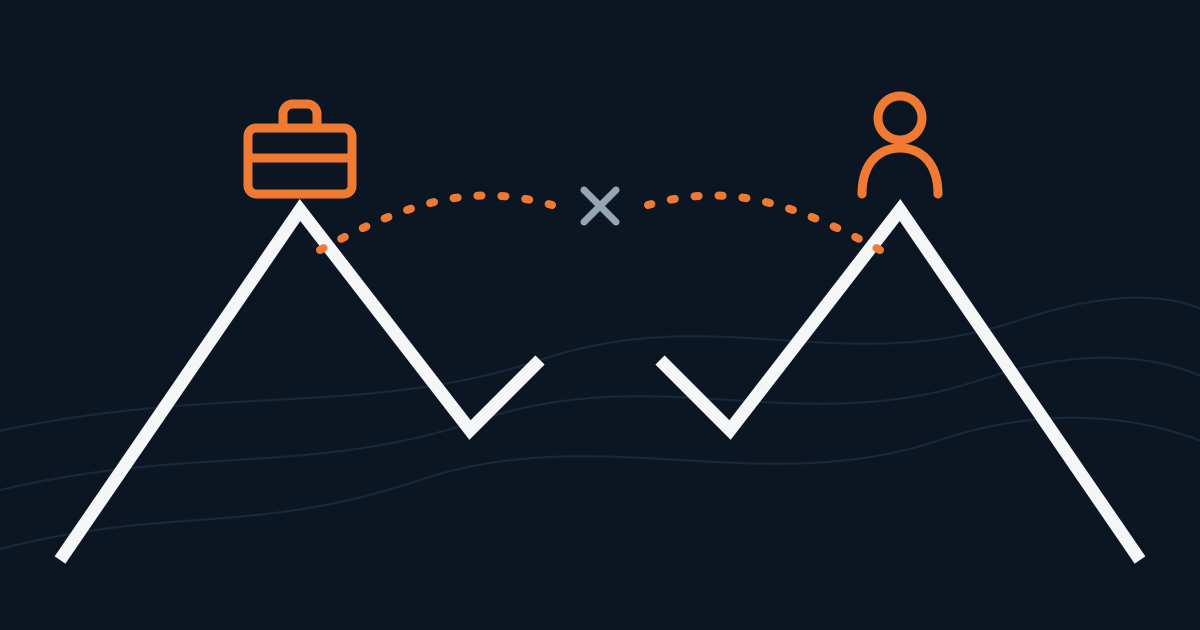
So you have employers drowning in applications from the wrong people, and the right people not applying at all. That's the hiring gap. It isn't a shortage of jobs or a shortage of talent. It's a matching problem.
Matching problems don't get solved by posting louder. They get solved by someone who knows both sides personally: who's hiring, who's looking, who's quietly open to a change, and what actually matters to each of them. That's the entire job of a recruiter, and it's why we built Rocky Mountain Hired the way we did. Local relationships, one conversation at a time.
If you're on either side of the gap, we'd love to close it for you. Employers can start with a discovery call. Job seekers can join the pipeline. Either way, you stop being a number in a stack.